Best Time to Snorkel in Moorea, Tahiti — Month-by-Month Guide (2026)
Moorea's lagoon is snorkelable year-round — water temperatures stay above 80°F and the coral reef is accessible in every month. But the experience changes significantly by season: humpback whales are present only from August to November, cyclone season runs November through April, visibility varies with trade winds, and some months offer calmer water, cooler temperatures, and clearer skies than others. This guide breaks down exactly what to expect in each month so you can time your visit to match what matters most to you.
Moorea Snorkeling Season Overview
Moorea has two distinct seasons that affect snorkeling in Moorea conditions: the dry season (May through October) and the wet season (November through April). Within these, humpback whale season (August–November) is the most significant special period for snorkelers.
- Best overall snorkeling: July, August, September — dry season + whale season starts
- Peak whale swimming season: September and October
- Clearest visibility: June through October (trade winds create calm, clear water)
- Warmest water: January through March (86°F/30°C) — but rainier and rougher
- Shoulder season: April–May and October–November — fewer tourists, good value
- Most challenging: December–February — rain, occasional cyclone risk, reduced visibility
Water Temperature by Month
Moorea's lagoon temperature varies between 82°F and 86°F across the year — warm enough for comfortable snorkeling without a wetsuit in every month. The coolest months are August and September (around 82°F); the warmest are January through March (around 86°F).
Month-by-Month Snorkeling Guide
January and February — Hot, Wet, Rough
January and February are the height of the wet season — heavy rainfall, occasional cyclone activity in the wider French Polynesia region, and humidity above 80%. The lagoon water is at its warmest (86°F) but visibility can be reduced near river mouths after rain. The outer barrier reef may be closed to tours on rough days.
Snorkeling is possible but conditions are more variable than any other period. Tourist numbers are lower and tour prices are at their annual minimum.
- Water temperature: 86°F (30°C)
- Visibility: 20–35 feet (reduced after rain)
- Weather: hot, humid, regular afternoon rain, occasional cyclone risk
- Wildlife: year-round species (sharks, rays, turtles) — no whales
- Crowds: low — good for deals
March — Wet Season Continues
March is similar to January and February — rain continues, visibility is variable, and the warm water is appealing but ocean conditions can make outer reef tours challenging. The cyclone risk begins to fade from late March. Water temperature remains at its annual peak (86°F).
Moorea's interior is lush green from the rains and scenery is particularly dramatic.
- Water temperature: 86°F (30°C)
- Visibility: 20–40 feet (improving from February)
- Weather: wet season, diminishing cyclone risk toward month end
- Wildlife: year-round species
- Crowds: low
April — Transition Month
April marks the transition from the wet season to the dry season — rain becomes less frequent, trade winds begin to return, and visibility in the lagoon improves noticeably. April is an excellent shoulder-season month: fewer tourists than June–August, fair conditions, and the water is still warm (85°F). Tour operators begin higher frequency departures from April.
- Water temperature: 85°F (29°C)
- Visibility: 30–45 feet
- Weather: improving — rain reduces, trade winds begin
- Wildlife: year-round species — no whales yet
- Crowds: low to moderate — good value
May — Entering the Dry Season
May begins the dry season proper — rain is infrequent, trade winds bring fresh air and calm lagoon conditions, and visibility improves to its best levels of the year. Water temperature drops slightly to 83–84°F, which is still comfortable without a wetsuit. May is an excellent month to visit: good snorkeling conditions without the peak-season prices and crowds of July and August.
- Water temperature: 83–84°F (28°C)
- Visibility: 35–50 feet
- Weather: dry season begins — sunshine, light trade winds
- Wildlife: year-round species — no whales yet
- Crowds: moderate — good balance of value and conditions
June — One of the Best Snorkeling Months
June is one of the prime months for snorkeling in Moorea. Trade winds have fully established, the lagoon is calm and clear, temperatures are comfortable (82–83°F in the water, 25–27°C air), and sunburn risk is lower than in summer months. Tourist numbers are rising toward the July–August peak but are still manageable.
Long daylight hours provide maximum snorkeling time.
- Water temperature: 82–83°F (28°C)
- Visibility: 40–55 feet
- Weather: dry season — sunny, fresh trade winds, comfortable temperatures
- Wildlife: year-round species — no whales yet
- Crowds: moderate and rising — book tours in advance
July and August — Peak Season + Whale Season Begins
July and August are the most popular months to visit Moorea — coinciding with school holidays in France and Europe, the Heiva i Tahiti cultural festival, and the start of the humpback whale season in August. Snorkeling conditions are excellent: calm lagoon, good visibility, and maximum wildlife diversity. Tour operators run at high capacity in July and August — book 2–4 weeks in advance to secure spots on popular departures.
- Water temperature: 82°F (28°C)
- Visibility: 40–55 feet
- Weather: dry season — best overall conditions of the year
- Wildlife: all year-round species + humpback whales arrive in August
- Crowds: high — peak season, book well in advance
September and October — Whale Season Peak
September and October are the peak months for humpback whale swimming in Moorea — the period when whale activity is highest, mother and calf pairs are most frequently encountered, and whale swimming tours have their best success rates. Snorkeling conditions remain excellent: clear water, calm lagoon, and comfortable temperatures. This is the optimal two-month window to combine whale swimming with reef snorkeling.
- Water temperature: 82–83°F (28°C)
- Visibility: 40–55 feet
- Weather: dry season ends, transitioning to wet — generally still excellent
- Wildlife: peak humpback whale season + all year-round marine life
- Crowds: moderate — lower than July–August despite being the best season
November — Whale Season Ends, Wet Season Begins
November is a transitional month — humpback whales begin to depart by mid-November, the wet season starts to establish, and afternoon rain becomes more frequent. The first two weeks of November can still offer good whale encounters, and reef snorkeling is excellent. From mid-November onward, weather is less reliable.
November is good value and less crowded than peak months.
- Water temperature: 83–84°F (29°C)
- Visibility: 30–45 feet
- Weather: wet season establishing — some rain, warm
- Wildlife: humpback whales through early–mid November, then year-round only
- Crowds: low — good value
December — Wet Season, Holiday Period
December sees increasing rainfall, rising humidity, and the return of the wet season pattern. The two-week holiday period (Christmas to New Year) is an exception — tourist numbers spike significantly and tour operators fill up quickly. Outside the holiday spike, December is a quieter, more affordable month with acceptable snorkeling conditions despite the weather.
The outer barrier reef tours are more frequently cancelled in December due to ocean conditions.
- Water temperature: 84–85°F (29°C)
- Visibility: 25–40 feet
- Weather: wet season — rain, heat, and humidity increasing
- Wildlife: year-round species only — no whales
- Crowds: low except Christmas/New Year spike
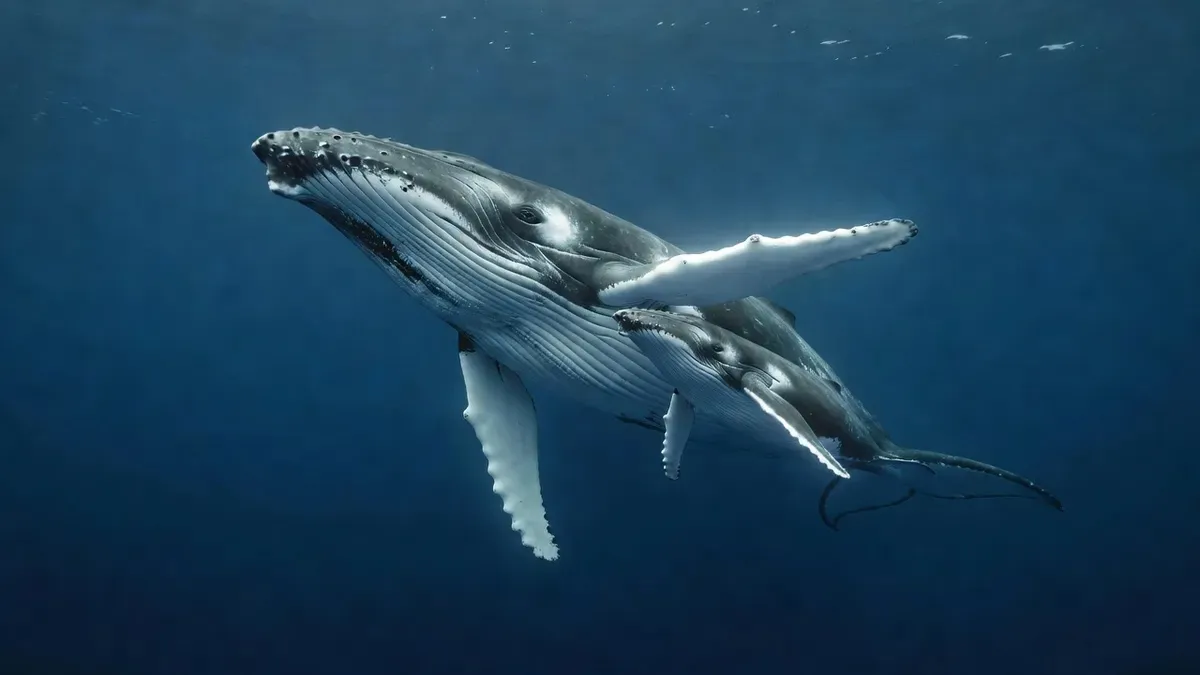
Humpback whales off Moorea — present August through November, with September and October being the peak months.
Best Time for Specific Snorkeling Experiences
Best Time to Swim with Humpback Whales
The humpback whale season runs from August through November, with September and October being the peak. Whales are most numerous and most actively displaying in September (mothers nursing newborn calves, males competing, breaching and tail-slapping visible from the boat). The Ariki Tours whale swimming and snorkeling tour is available throughout the season — booking in September or October maximizes the probability of an in-water encounter.
- Best: September and October
- Also good: August (late) and November (first two weeks)
- Not available: November (mid) through July
Best Time for Reef Snorkeling and Visibility
June through September offers the clearest visibility (40–55 feet) and calmest lagoon conditions of the year, combining trade wind stability with dry weather. For pure reef snorkeling at Coral Garden Tiahura, Temae Beach, and the inner lagoon spots, any month from May through October is excellent.
- Best: June, July, August, September
- Also good: May and October
- More variable: April, November
- Most challenging: December through March (wet season)
Best Time to Avoid Crowds
The peak season (July–August) and the Christmas/New Year period (late December to early January) see the highest tourist volumes in Moorea. For fewer crowds, May–June offers good conditions with manageable visitor numbers. September–October is ideal: whale season at its peak but tourist numbers lower than the July–August wave.
- Least crowded: January–March (wet season — trade-off is weather)
- Best combination of value + conditions: May and June
- Best combination of conditions + wildlife + manageable crowds: September–October
Best Time to Snorkel in Moorea — FAQ
Can I snorkel in Moorea year-round?
Yes — Moorea's lagoon is snorkelable in every month. Water temperature stays above 82°F (28°C) throughout the year, and the inner lagoon sites (Temae Beach, Coral Garden Tiahura, Hauru sandbar) are accessible in virtually all conditions. The outer barrier reef tours are occasionally cancelled in rough weather during the wet season (December–March). The only experience limited to a specific season is humpback whale swimming, which is available only from August through November.
What month is the absolute best for snorkeling in Moorea?
September combines the best conditions of any single month: clear water and calm seas from the dry season (visibility 40–55 feet), peak humpback whale activity from August's migration, lower crowd levels than July–August, and comfortable water temperature around 82°F. For travelers who want the full Moorea snorkeling experience — reef, sharks, turtles, stingrays, and whales — September is the optimal month.
Is Moorea snorkeling good in December?
December offers acceptable snorkeling with some trade-offs. The wet season brings more rain, higher humidity, and reduced visibility (25–40 feet) compared to the dry season. Outer reef tours are more frequently weather-cancelled. The inner lagoon spots — Temae Beach, Coral Garden Tiahura, and the stingray sandbar — remain good in most conditions. The Christmas period (December 23–January 2) sees a tourist spike; beyond that, December is quiet and prices are lower.
What are the chances of seeing humpback whales in Moorea?
During the peak season (September–October), humpback whale sightings on the Ariki Tours circuit are very high — the operator networks with other local guides and extends tour time when necessary to locate whales. Earlier in the season (August) and later (November) sighting rates are somewhat lower but still excellent. Sightings are never guaranteed, but the combination of Moorea's location in French Polynesia's whale migration corridor and experienced local guides makes this one of the most reliable whale swimming destinations on Earth.
What is the cyclone risk for Moorea?
Moorea is in the South Pacific cyclone zone, with cyclone season running from November through April. Direct cyclone strikes on Moorea are rare — the island is outside the most active cyclone belt — but tropical storm conditions can affect snorkeling tours during this period. Tour operators cancel departures when ocean conditions are unsafe. Travel insurance covering weather cancellations is recommended for wet-season travel to Moorea.